

Home Blog

Forum Economic Ministers back regional action on energy crisis and economic inclusion

Pacific finance ministers have reaffirmed their commitment to stronger regional cooperation, energy security and economic resilience as they concluded the 2026 Forum Economic Ministers Meeting (FEMM) in Majuro Wednesday amid growing global economic uncertainty and an ongoing regional energy crisis.

Speaking at a press conference after chairing the meeting, Marshall Islands Minister of Finance, Banking and Postal Services David Paul said ministers met at a time when Pacific economies continue to face mounting external pressures.

“Ministers met at a time when Pacific economies continue to navigate an increasingly complex global environment shaped by geopolitical tensions, energy market disruptions, inflationary pressures, climate impacts, and supply chain challenges,” he told journalists.

Paul said ministers responded by reaffirming regional commitments under key Pacific frameworks.

“In response, finance ministers reaffirmed our shared commitment to stronger regional cooperation and collective action under the 2050 Strategy for the Blue Pacific Continent and the Pacific Roadmap for Economic Development.

Our discussions were constructive, forward-looking, and grounded in practical solutions,” he said.

Paul said ministers agreed on the need to strengthen energy security, improve economic preparedness and build long-term resilience across the region.

“Ministers emphasised the importance of strengthening regional energy security, enhancing economic preparedness through better data and risk monitoring, and building long-term resilience through economic diversification, sustainable energy transition, and coordinated regional responses.”

Paul said the meeting also advanced several regional priorities.

“We also advanced several key regional priorities, including sustainable fisheries development, private sector growth, action on non-communicable diseases, greater access to climate and disaster risk finance, stronger financial connectivity and correspondent banking relationships, and the operationalisation of the Pacific Resilience Facility(PRF).”

He said ministers reaffirmed support for member-led regional initiatives aimed at improving the lives of Pacific people.

“Above all, ministers reaffirmed the value of member-led regional initiatives that deliver tangible benefits for our people and strengthen the resilience, prosperity, and sustainability of the Blue Pacific in an increasingly uncertain world.”

Forum Secretary General Baron Waqa said ministers gathered under the theme *Economic and Financial Inclusion in the Pacificand focused on the region’s most pressing economic challenges.

This year’s meeting brought together economic and finance ministers, both in person and virtually, to discuss the key economic priorities shaping our region’s future.

Against the backdrop of increasing global uncertainty, ministers reaffirmed the importance of collective action, deeper regional cooperation, and practical partnership to enhance a resilient, prosperous, and secure Blue Pacific for current and future generations.”

Waqa said discussions centred on ensuring economic growth benefits all Pacific communities.

“The discussions emphasised our shared commitment to strengthening economic resilience and ensuring that the benefits of development are accessible to all Pacific peoples.”

“A significant focus of the meeting was the ongoing energy crisis and its far-reaching impacts across Forum member countries.

“Ministers considered the evolving situation and the region’s coordinated response, noting the decision by Pacific Islands Forum Leaders to invoke the Biketawa Declaration as the framework for addressing this challenge.

“Discussions highlighted the importance of regional solidarity, coordinated action, and long-term solutions to strengthen energy security across the Pacific,” said Waqa.

Waqa said ministers also reviewed progress on the region’s economic development agenda and implementation of the 2050 Strategy for the Blue Pacific Continent.

“Throughout the two-day meeting, ministers engaged in constructive and forward-looking deliberations centred on advancing the priorities of the Roadmap on Economic Development and supporting the implementation of the 2050 Strategy for the Blue Pacific Continent.

The exchange of perspectives and experiences highlighted both the challenges we face and the opportunities that can be realised through stronger regional cooperation.”

He said the outcomes demonstrated a shared commitment to tackling common challenges and building a stronger regional future.

“The outcomes of this meeting reflect our collective determination to work together in addressing shared challenges and advancing a more inclusive, sustainable, and resilient future for the Blue Pacific.”

Paul thanked ministers, officials, private sector representatives, civil society organisations and development partners for their contributions to the meeting.

The meeting concluded with ministers reaffirming the importance of collective action, stronger regional cooperation and practical partnerships to address economic challenges, improve energy security and advance a more inclusive and resilient Blue Pacific.

Bougainville MP calls for managed transition toward self-government and Independence

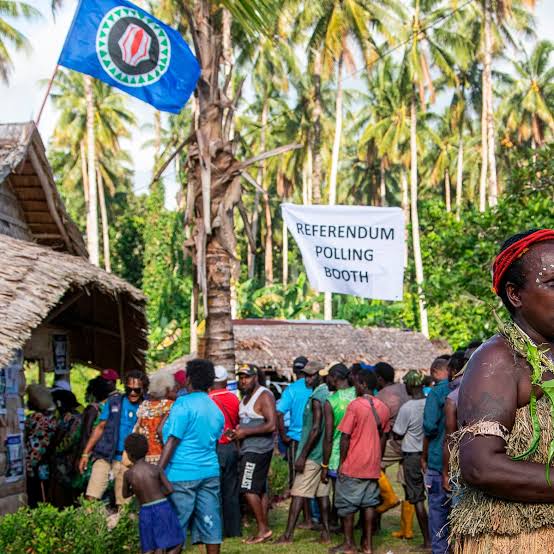
Bougainville Regional Member Peter Tsiamalili Jr has called for a carefully managed transition toward greater self-government and eventual independence for Bougainville, arguing that the future relationship between Bougainville and Papua New Guinea should be guided by Melanesian values and built on mutual respect, peace and stability.

In remarks titled “A Melanesian Vision for Bougainville’s Future,” Tsiamalili said the discussion on Bougainville’s political future should move beyond immediate debates and focus on the long-term relationship between the two peoples.

“As our Nation continues its important discussions on the future political status of Bougainville, I believe it is equally important that we lift our eyes beyond the immediate debates of today and begin to imagine the relationship we wish to build for future generations,” he said.

Tsiamalili said the Bougainville Peace Agreement, constitutional provisions, recent consensus among Bougainville leaders and the referendum result had already established a pathway forward.

“The challenge before us now is not simply a legal or political one. It is a question of vision,” he said.

He noted that discussions had often been framed as a choice between maintaining the status quo and complete separation, but said Melanesian traditions offered a different perspective.

“For many years, discussions have often been framed as a choice between remaining as we are or pursuing complete separation. Yet as Melanesian people, our history teaches us that relationships are rarely defined in such absolute terms.”

He said Melanesian societies had historically balanced self-governance with strong cultural, family, trading and spiritual connections across communities.
“For thousands of years, our communities governed themselves while maintaining deep cultural, family, trading and spiritual ties across islands, regions and language groups. We understood that identity and relationship could coexist. Self-government and unity were not contradictions

“The recent Bougainville leadership consultations reaffirmed our collective commitment to a peaceful and lawful pathway toward self-government and eventual independence, while recognising the importance of preserving peace, stability and respectful engagement with Papua New Guinea,” he stressed.

He said Bougainville should continue exploring arrangements that respect both the referendum outcome and the relationship with PNG.

“As Bougainville advances toward greater political responsibility, we must continue to explore solutions that honour both the democratic aspirations of our people and the enduring bonds that connect us to Papua New Guinea.”

Tsiamalili said his preferred approach was a gradual transition tied to progress in governance, economic development and institutional capacity.

“In my personal view, the future should be guided by a carefully managed and measured transition, where increasing levels of self-government are matched by demonstrated progress in governance, economic development, fiscal capacity, institution building, law and justice, revenue generation and public service readiness.”

“Such an approach would allow Bougainville and Papua New Guinea to continue building trust while creating the conditions necessary for a durable and peaceful settlement,” he said.

Tsiamalili said the objective should be a settlement that benefits both parties rather than creating winners and losers.

“The ultimate goal should not be victory for one side and defeat for the other.

Rather, it should be the creation of a new relationship founded on mutual respect, shared history and recognition of the aspirations of both peoples,” He explained.

He outlined the principles that should underpin any future settlement.

“A settlement that preserves peace. A settlement that respects the referendum mandate. A settlement that safeguards regional stability.

A settlement that strengthens the bonds between Bougainville and Papua New Guinea rather than weakens them,” he stressed.

Tsiamalili also highlighted support for what he described as a Melanesian-style political understanding between Bougainville and Papua New Guinea.

“The recent leadership discussions also recognised the importance of a Melanesian-style political understanding between Bougainville and Papua New Guinea — one that reflects our unique history, our shared sacrifices, and our common desire to see both peoples prosper in peace and dignity.”

“The future relationship between Bougainville and Papua New Guinea should therefore be shaped not only by constitutional provisions, but also by the values that have sustained Melanesian societies for generations: respect, consensus, reciprocity, kinship and unity,” he said.

Tsiamalili said future generations would judge leaders on how they managed the relationship between Bougainville and Papua New Guinea.

“History may ultimately judge us not by how firmly we held our positions, but by how wisely we transformed our relationship.”
“The task before us is therefore not simply to determine a political destination.

It is to build a future that allows both Bougainville and Papua New Guinea to walk forward together with dignity, confidence and peace,” he said.

Tsiamalili also called for a future based on partnership rather than division.

“If we succeed, future generations may look back and say that this was the moment when Bougainville and Papua New Guinea chose not division, but transformation; not uncertainty, but partnership; not conflict, but a new Melanesian covenant founded on mutual respect, peace and shared destiny,” he said.

NZ PM Luxon, PM Rabuka discuss fuel crisis and drug threats

0

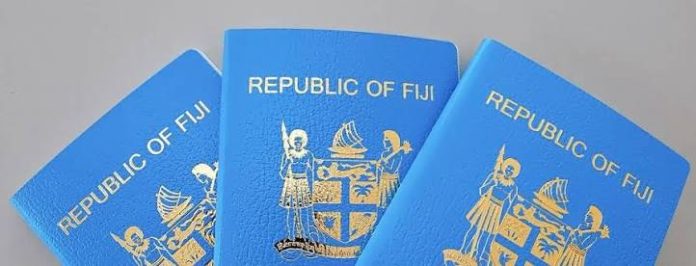
New Zealand Prime Minister Christopher Luxon has reaffirmed Fiji’s importance as a key regional partner following a phone conversation with Prime Minister Sitiveni Rabuka yesterday.

In a post on X, Luxon said the two leaders discussed a range of issues affecting both countries, including the ongoing fuel crisis and efforts to combat the flow of illicit drugs across the Pacific.

“Fiji is an indispensable partner to New Zealand in the Pacific. So, I enjoyed speaking by phone last night with my friend, Prime Minister Sitiveni Rabuka,” Luxon said.

The New Zealand Prime Minister said the discussion focused on shared challenges and opportunities facing the two countries.

“We discussed the issues that matter for both of us, from navigating the fuel crisis to preventing the flow of drugs.”

The comments come as Pacific nations continue to grapple with disruptions to fuel supply chains and increasing concerns over transnational drug trafficking routes in the region.

Luxon also highlighted opportunities for deeper cooperation between Fiji and New Zealand, particularly in trade and security.

“There’s more Fiji and New Zealand can do together, whether that’s achieving our ambition for two-way trade or growing our security partnership.”

The remarks signal New Zealand’s continued commitment to strengthening ties with Fiji, one of its closest partners in the Pacific, as both countries work to address regional economic and security challenges.

No Rain, No Relief: Palau and Western Micronesia brace for dry stretch before El Niño arrives

0

Palau and nearby Yap State are in for a stretch of drier-than-normal weather in the coming weeks, and residents are being urged to watch their water supplies closely — even as forecasters say wetter conditions are likely to return later this year when El Niño develops.

The warning comes from the National Weather Service in Guam, which issued a Drought Information Statement covering Micronesia. The report paints a mixed picture for the region: while some islands are recovering from recent flooding, Palau sits on the drier end of that divide.

The split stems from Super Typhoon Sinlaku, which tore through the region in recent weeks. The storm dumped heavy rain and caused flooding across Chuuk State, Guam, and the Northern Mariana Islands. But as Sinlaku moved through, it pulled dry air in behind it — and that dry air settled over Palau, Yap State, and the equatorial belt.

The result: while much of Micronesia got soaked, Palau and Yap have seen well below-normal rainfall over the past month.

On Yap’s main island, grass is already turning brown, according to local reports cited in the statement. Communities near the outer island of Woleai are reporting similar browning vegetation and early signs of water shortages.

The weather pattern that dried out Palau is expected to hang around in the near term. Forecasters say the normal trade-wind season — essentially a period of more stable, drier weather — has settled across the region now that Sinlaku has moved on and dissipated.

Computer weather models for the next two to three weeks point to a continued drying trend pushing from the Philippines southward into Palau and Yap. Scattered showers are expected to pop up across the rest of Micronesia, but areas near the equator, including Palau, will likely stay on the dry side.

The longer-range forecast offers more hope. Weather scientists say the Pacific Ocean is currently in a neutral state — meaning neither the warming El Niño nor the cooling La Niña pattern is dominant right now. That’s expected to hold through May or June.

After that, an El Niño is likely to develop sometime between May and July and persist through the end of 2026. El Niño typically brings above-normal rainfall to most of Micronesia, which would eventually ease dry conditions across Palau and the wider region.

“These trends are typical, but not guaranteed,” the National Weather Service cautioned in the statement.

Officials are asking Palauans and residents of affected islands to take the dry stretch seriously — especially on small, low-lying islands and atolls where the only freshwater supply sits just below the surface of the ground or collects in rooftop catchment tanks. Those water sources can dry up faster than people expect during a drought.

The Weather Service advises residents to monitor their water levels now and follow any conservation measures recommended by local authorities. If there’s less rain than usual, use less water — before it becomes critical.

People are also being asked to report any visible signs of water stress — wilting crops, dying vegetation, low cisterns — to local disaster control officers and weather station offices. Those on-the-ground reports help officials decide when a drought has reached the level requiring a formal government response.

There is an additional, less obvious hazard to keep in mind: the debris left behind by Sinlaku. Fallen branches, dried vegetation, and storm litter become potential fire fuel once they dry out. A prolonged dry spell could increase the risk of brush fires spreading rapidly in affected areas.

The drought situation across Micronesia has actually improved in recent weeks for some islands farther east. The Marshall Islands atolls of Utirik and Wotje, which had been under severe and moderate drought watches, have both been cleared as of April 7. That means the National Weather Service will not issue further drought statements for those locations unless conditions worsen again.

For Palau, the road ahead looks temporarily dry — but with relief potentially on the way by mid-year.

From Island Roots to Ocean Guardian

For Akosita Cavora Samuela, protecting fisheries resources was never just an ordinary job, it was a responsibility shaped by her ancestral place of origin.

The 34-year-old fisheries officer, who hails from Narocivo on Nayau Island and has maternal links to Doi in Ono-i-Lau in Fiji’s Lau Group, grew up in Suva. Although she was raised in the capital, the ocean remained a big part of her life and helped shape who she is today.

“It provides food, employment, culture, identity and connection between communities,” she said.

That deep connection to the sea eventually inspired a career dedicated to protecting it.

Akosita’s journey into fisheries began after she completed a Diploma in Applied Fisheries Technology at the Fiji National University. She later joined the Offshore Division of the Fiji Ministry of Fisheries, where she gained firsthand experience of the vital role tuna fisheries played in the economy and well-being of Fiji and the wider Pacific region.

“What drew me to this line of work was the responsibility to help protect our oceans for future generations,” she said. “Fisheries work is not only about enforcement. It is about protecting livelihoods, ensuring resources are used sustainably and supporting communities that depend on the ocean every day.”

This sense of responsibility inspired her to join Operation Tui Moana, which took place on 4-22 May 2026, that involved fisheries, maritime and enforcement officers from across the Pacific, working side by side to strengthen regional fisheries monitoring, control and surveillance efforts.

Representing Fiji during the operation was a proud and humbling experience.

“It was a great honour,” she reflected. “It made me proud to stand alongside other fisheries officers working together to protect our shared ocean resources and strengthen regional cooperation.”

While much of the operation involved compliance checks, monitoring activities and making sense of information coming in from across the region, Akosita said the most rewarding part was the opportunity to learn from others.

“The most memorable part was learning from officers across the Pacific and sharing experiences on monitoring, control, surveillance and compliance operations.”

However, the operation had its own challenges.

“One of the biggest challenges was adapting to the demanding operational environment and maintaining attention to detail during compliance and monitoring activities,” she said. “Analyst work requires patience, discipline and professionalism at all times.”

Yet among the long hours and technical work, one moment stood out in her mind.

“A highlight for me was seeing fisheries, navy and maritime officers working together so effectively despite coming from different countries and backgrounds,” she recalled. “It showed the strength of Pacific unity and our shared commitment to protecting fisheries resources.”

For Akosita, the significance of the operation extended well beyond the operations room.

As a Pacific Islander, she understood that healthy tuna stocks supported economies, created jobs and strengthened food security across the region. Sustainable management today helped ensure those benefits would remain available for future generations.

“What kept me motivated was knowing that the work we did contributed to protecting fisheries resources, combating illegal fishing, supporting communities and safeguarding the future of our fisheries industry.”

For Akosita, the significance of the operation extended well beyond the operations room.
As a Pacific Islander, she understood that healthy tuna stocks supported economies, created jobs and strengthened food security across the region. Akosita and her fellow secondees after their certificate presentation at the end of the operation.

As she returned home to Fiji, Akosita carried with her new knowledge, skills and experiences that had enriched her professional development, and this would help strengthen fisheries compliance and surveillance efforts. Perhaps the biggest lesson she took away was the fact that protection of Pacific’s fisheries was a shared regional responsibility. “No single country can protect the ocean alone,” she said. “Regional cooperation strengthens enforcement, information sharing and fisheries management across the Pacific.”

For a woman who grew up surrounded by the ocean, that message was both personal and professional. The waters that shaped her childhood were the same waters she now helped protect, helping to ensure future generations could continue to depend on them, just as her ancestors had done for generations.

About Operation Tui Moana 2026

Operation Tui Moana 2026, led by the Pacific Islands Forum Fisheries Agency (FFA), brought together fisheries, maritime and law enforcement personnel from across the Pacific to strengthen efforts against illegal, unreported and unregulated (IUU) fishing and other transnational maritime crimes.

The three-week operation covered the Exclusive Economic Zones (EEZs) of 10 Pacific Island countries and adjacent high seas areas, combining maritime patrols, aerial surveillance, intelligence analysis and compliance monitoring. At its centre was the FFA Regional Fisheries Surveillance Centre (RFSC) in Honiara, where 21 secondees from FFA Members, partner agencies and monitoring, control and surveillance organisations worked together to coordinate intelligence, planning and surveillance activities.

During the operation, authorities conducted 61 vessel inspections, verified more than 200 vessel detections, identified four vessels of interest and made two apprehensions linked to suspected fisheries-related offences.

Operation Tui Moana also strengthened regional cooperation under the Niue Treaty Subsidiary Agreement through joint surveillance activities, boarding exercises and intelligence sharing. As fisheries compliance challenges continue to evolve, operations such as Tui Moana play a vital role in protecting Pacific fisheries resources, supporting the sustainable management of tuna stocks and ensuring the benefits remain with Pacific people, in line with the 2050 Strategy for the Blue Pacific Continent.

Climate crisis: UN chief lays out solutions blueprint for clean energy transition

0

As a deadly heatwave continued to grip Europe on Tuesday, UN Secretary-General António Guterres issued an impassioned appeal for more ambitious global action on climate change caused by fossil fuels, to prevent irreversible damage.

In a major keynote speech at London Climate Action Week, the UN chief called on AI firms to “come clean” on the full environmental impact of data centres in terms their carbon, water and land footprints.

The Secretary-General also highlighted how the world’s dependence on oil is driving both the climate crisis and an energy sovereignty crunch, the latter linked to massive shipping disruption in the Strait of Hormuz and the war involving Iran, Israel and the United States.

“These crises may seem separate but they share the same destructive origin: fossil fuels. And they demand the same answer: a fast, fair transition to clean energy and a surge in adaptation, resilience and climate justice for those already facing climate harm,” Guterres said, in a call for political leadership to push through global change akin to that required to phase out leaded gasoline and to ban chemicals that created a hole in the ozone layer.

Earth’s tipping points

It is more than a decade since world leaders agreed in Paris to limit global temperature rise to 1.5°C above pre-industrial levels, a remarkable show of international unity, led by the UN. Today, although that Agreement stands – and despite the US officially withdrawing for a second time in January this year – UN-backed scientists warn that average annual temperatures are likely to exceed that threshold in coming years.

“Every fraction of a degree matters,” the Secretary-General insisted, as he forewarned of the irreversible damage to coral reefs unable to survive in too-warm waters, the melting ice sheets that threaten to reshape coastlines and displace millions, and the real possibility that some small island nations could disappear under the waves.

Faced with this existential scenario, “the task before us is to strictly limit the overshoot, shorten its duration and bring temperatures down below 1.5°C as fast as possible”, Guterres maintained.

‘Mother of all energy shocks’

And while he pointed out that “any peace agreement is welcome and would bring much needed relief”, in reference to a 60-day pause in hostilities to allow ongoing Iranian-US talks in Switzerland, the UN chief noted that the Middle East crisis had unleashed “the mother of all energy shocks” comparable to the oil disruption of the 1970s and the full-scale Russian invasion of Ukraine.

As damaging as the Middle East war has been for highly industrialized nations, the UN Secretary-General insisted that developing countries have been hit even harder:

“It is a debt shock, a food shock, a development shock”, he told the London audience.

A just future from renewables

“The good news is – unlike every past energy crisis – we now have a clear way out, a clean way out,” the Secretary-General continued.

He noted that since 2010, the cost of solar energy has plummeted by almost 90 percent, onshore wind by more than 70 percent, and battery storage by 95 percent.

Renewables avoided more than the annual carbon dioxide emissions of the U.S, the EU and Japan combined, Guterres said, adding that clean energy investment now attracts almost twice as much as fossil fuels.

“There are no embargoes on sunlight and no blockades on the wind,” he said.

A seven-point plan for energy independence

As part of the Secretary-General’s blueprint for a clean break with fossil fuels, he outlined seven key steps:

1: Emissions must peak immediately and fall steeply this decade, reaching net zero by 2050. The G20 group of wealthy nations “must lead” on this, as it is responsible for around 80 percent of global emissions, Guterres said. Ambitious measures include a global Call to Action on Methane to reduce emissions of the gas traps around 80 times more heat than carbon dioxide, but which breaks down in the atmosphere within just a decade or two.

“The world phased out leaded gasoline. We eliminated ozone-depleting chemicals. Methane pollution must be next,” the UN chief stressed.

2: Clean energy projects should be promoted and public subsidies ditched for new fossil fuel projects. “The eight largest fossil fuel companies reported pocketing an extra US$6.5 billion in the first quarter of this year alone…I urge governments to tax them” to help vulnerable families and communities and accelerate the shift to clean, affordable energy, Guterres said.

3: Every major AI company should “measure and publicly disclose the full environmental impact” of data centres: their carbon, water and land footprints – and commit to power every data centre with renewable energy by 2030. Today, AI data centres already consume more electricity than most nations; “it’s time to come clean”, the UN chief noted.

By 2030, AI data centres could use enough water to meet the basic needs of all 1.3 billion residents of sub‑Saharan Africa for an entire year, the UN chief said.

4: “No more extraction without development:” Guterres called for greater support for the move to clean energy in a way that benefits workers and communities everywhere and developing countries too, driven forward by the UN Climate Conference – COP31 – in Türkiye. “The transition itself is no longer in question,” he stressed, adding: “It will be either managed or chaotic, fair or unequal, a source of stability or of greater division; and these choices are still ours to make.”

5: Protect those most at risk from climate chaos by helping them adapt, because this “saves lives, safeguards homes and communities, helps economies absorb shocks and holds societies together”, the Secretary-General insisted. Contingency systems need to be put in place before shocks become humanitarian and economic catastrophes, Guterres added. At the same time, developed countries must deliver on their “long-standing commitment to double adaptation finance, with a clear trajectory toward tripling it”, he said.

6: Support fair finance to support phasing out fossil fuels and the green transition at scale and at speed: because many developing countries face borrowing costs that are two to three times higher than in wealthier economies.

“Countries rich in renewable potential are being locked out of the clean energy revolution,” the UN chief maintained, pointing to African countries which receive only two percent of global clean energy investment even though they possess 60 percent of the world’s best solar resources.

Guterres highlighted the US$600-US$800 billion in additional lending capacity of multilateral development banks, such as the World Bank. This should be used “aggressively” to finance the infrastructure of the future and climate adaptation, along with other investment measures such as taxing high-emitting sectors, he maintained.

Equally, “developed countries must keep their promises”, including support to the Fund for Responding to Loss and Damage and the Green Climate Fund, the Secretary-General continued, noting that the US$300 billion pledged to developing countries must be delivered along with concrete steps to mobilise US$1.3 trillion a year by 2035.

7: Finally, the UN Secretary-General urged support for science as the bedrock of truth and early warning systems – and to tackle climate falsehoods, since “disinformation is spreading deliberately to delay climate action, entrench vested interests, and erode trust”.

Human rights defenders and journalists reporting on the climate and the environment should be protected and trust in evidence and institutions bolstered, Guterres insisted, pointing to the Global Initiative for Information Integrity on Climate Change, led by the UN, UNESCO and Brazil in support of this goal.

Pacific must move faster on financial inclusion, Marshall Islands President Heine tells Ministers

Marshall Islands President Dr Hilda Heine has challenged Pacific finance ministers to accelerate efforts to improve financial inclusion, saying advances in connectivity and digital technology have created new opportunities to overcome long-standing barriers facing Pacific economies.

Opening the Forum Economic Ministers’ Meeting (FEMM) in Majuro Tuesday, Heine said the theme, Economic and Financial Inclusion in the Pacific, reflected both the challenges and opportunities confronting the region.

“This year, financial inclusion is more within reach than it has ever been, not because the challenge has grown smaller, but because our collective capacity to meet it has grown stronger,” she said.

Heine said many Pacific economies, including the Marshall Islands, remain fragmented, with people, businesses and public services spread across vast distances and often disconnected from global financial systems.

“Like many Pacific economies, ours is fragmented and does not operate at scale.

Our people, our businesses, and our public services are scattered across vast distances and, too often, cut off from the broader financial systems that much of the world takes for granted,” she explained.

She said the loss of correspondent banking relationships had deepened financial isolation across the region.

“After 2001, the world rightly moved to protect the global financial system. Laws such as the United States’ Bank Secrecy Act and the Patriot Act tightened the rules on how money moves across borders. We do not dispute the purpose; the integrity of the system protects all of us. But for small Pacific states, the consequences were severe.”

“The correspondent banking relationships – the very links that connect a small economy to the global one — were cut. Across our region, they fell by roughly sixty percent in a decade, twice the global rate,” President Heine told Ministers.

President Heine said compliance requirements designed to protect the financial system had become barriers for Pacific communities.

“Across our islands, we have faced a hard truth: the same compliance burden designed to keep the system safe had become a barrier that kept our people out of it. Distance was already pushing financial services beyond reach.

De-risking pushed them further still,” she said.

The Marshall Islands President said the situation had changed significantly with improvements in connectivity and payment technologies.

“Approaches that were impossible ten years ago are possible today. Connectivity has transformed. New low-earth-orbit satellite networks, such as Starlink, now reach households on the most remote atolls, closing the ‘last meter’ between a citizen and a functional financial service.”

“The cost of moving money has collapsed; modern digital rails can settle a payment in seconds, for a fraction of a cent, on a basic mobile phone,” she said.

President Heine said international standards and regulatory frameworks now provide opportunities for small states to participate safely in digital financial systems.

“And, just as importantly, the world has learned how to do this safely. Over the past decade, shared standards and best practices have emerged for providing oversight and ensuring compliance while using digital assets. This time, the requirements do not shut us out. With the right regulatory framework, even a small nation can meet them,.” she explained.

She said financial inclusion was no longer a question of feasibility.

“We can now turn toward bringing the economies of the Pacific closer: closer to one another, and closer to the wider world. That is the heart of why I am hopeful. Financial inclusion is no longer a question of whether it is possible. It is a question of which paths we choose, and how quickly and carefully we walk them,” the President said.

Heine said the Marshall Islands had already begun exploring digital solutions and would share more details during the meeting.

“In the Marshall Islands, we have not waited. We have explored digital approaches — built to international standards, with proper oversight.” she stated.

President Heine stressed that regional cooperation would be essential to addressing economic and financial isolation.

“But no single nation can solve this alone, nor should any of us try. Ours is one path. Many of you are advancing other paths — in mobile money, in digital identity, in national payment systems and regional settlement,” she said.

Heine said the meeting agenda addressed the major economic challenges facing the Pacific, including pressures on essential services, disruptions in key sectors and growing vulnerabilities in communities.

“My hope for this week is simple: that you bring forward the ideas already taking shape across our islands; that you speak candidly about what has worked and what has not; and that you leave Majuro more aligned – governments, regulators, banks, partners and private sectors together – to carry this work forward with clarity and purpose,” she emphasised.
She said financial exclusion was a regional challenge that required a regional response and urged immediate action.

“Because what I have described is not a Marshall Islands problem. It is a Pacific problem. It is one that the Forum Economic Ministers must rightfully challenge.”

“The tyranny of distance, the retreat of the banks, the exclusion of our people — these challenges are shared by every nation represented here. And so the opportunity is shared as well. A Pacific-wide problem is a Pacific-wide opportunity,” President Heine.

“We can not afford the luxury of delay. So I challenge each of us to shift from intentions to immediate results required to protect and advance our people today,” President Heine said.

Solomons sirens call for climate action

0

Rising from the sea around Isabel Province, a new sculpture by British artist, Jason deCaires Taylor, was installed last week.

The live-size sculpture, called ‘Solomon Siren,’ depicts the story of climate activist, Gladys Habu Bartlett, whose ancestral land on Kale Island has gradually disappeared beneath the sea, the statement said.

Over the past two decades, rising sea levels have inundated the island, forcing her family to relocate.

In recent years, Gladys has highlighted the plight of Kale to demonstrate the world’s complacency towards the threat faced by many small island states in the Pacific, the UK High Commission in Honiara said in a statement.

A new assessment by the UN indicates that global sea levels are increasing at twice the rate of a decade ago.

The sculpture of stainless steel and concrete depicts a life-size figure of Gladys, her head resting against a tree stump, the statement said.

The figure represents all women in the community, reflecting on the loss of their lands to the sea. At high tide, the sea submerges a large part of the figure.

The body of the figure is inscribed with a series of dates that mark Kale Island’s fate: 2006, when rising sea waters became alarming; 2016, when scientists confirmed the complete loss of Kale; and 2026, the year the sculpture was installed, the statement said.

“The sculpture will serve as a memorial to the vanished island of Kale,” said artist Taylor.

Taylor, who is based in London, is an award-winning sculptor who is widely regarded as the founder of underwater art.

He has constructed sculptures in seas all over the world, including in the Caribbean and Indian Ocean.

Through his works, he aims to draw attention to the fragility of the maritime environment and the communities in these regions.

Former Prime Minister, Jeremiah Manele, whose constituency is in Isabel, and British High Commissioner Paul Turner opened the event last Thursday with Gladys Bartlett cutting the ribbon.

Turner told the community that the UK will continue to be a voice for Pacific Island states on climate action, the UK High Commission statement said.

He said that ‘Solomon Siren’ is yet another wake-up call for climate-change deniers to understand the impact of rising sea-levels on people’s lives.

The timing is perfect just before the COP Summit.

The official opening was attended by landowners of Kale and the provincial community who marked the poignant event with songs and prayers.

As everyone departed, the Solomon Siren stood alone against the incoming tide, as it will for many years to come.

The aftermath of logging’s broken promises: Can carbon trading save Makira’s last forests?

0

By Georgina Maka’a & Ronald Toito’ona

Once called Solomon Islands’ least developed province, the logging industry was sold as the catalyst for change for Makira-Ulawa province.

Instead, with 75 percent of loggable trees already harvested, the industry has left a legacy of unfulfilled promises.

For decades, Makira-Ulawa has been forgotten by developers, except for those looking to extract its timber.

Today, the graveyards of rusty machinery left behind by loggers now become monuments to unfulfilled promises.

A recent visit to the Bauro region of Makira Island by In-depth Solomons uncovered a grim reality.

While the logs are nearly gone, the promised clinics, schools, churches and prosperity never arrived.

As the province faces total forest depletion, this special report uncovers the permanent impacts on village life and the new hope found in carbon trading.

An aerial view of KiraKira Township, the provincial capital of Makira-Ulawa. Photo: Ronald Toito’o via In-depth Solomons

What’s Left? Nothing

When the logging machines fall silent and the foreign workers depart, what remains for the people of Bauro in Central Makira is one big question.

For Dominic Taro, a 73-year-old elder from Manihuki Village in central Bauro, the answer is heartbreaking.

“There’s nothing left behind. Nothing,” Taro told In-depth Solomons.

Taro has seen six different companies operate in his area since the 1980s.

“I have not seen any changes logging brought to our communities. They have not helped us to build clinics, schools, or facilities,” he added.

He told In-depth Solomons that the math of logging rarely favors the local land owners or even the villagers.

While millions of dollars in timber leave the shores, Taro recalls the highest royalty share he ever received was a mere SBD$1,000(US$123).

At the time, this amount was not enough to build a permanent home, let alone starting a small income generating business.

Dominic Taro, 73, of Manihuki Village has lived to see six different companies operate in his area since the 1980s. Photo via In-depth Solomons

Rosina Aramo of Kaonasugu echoes this, noting that in 2018, a company promised to rebuild a local church in her community.

“Today, years after they left, not a single nail has been driven,” she said.

Rosina Aramo. Photo via In-depth Solomons

Nigel Usumae, a local farmer, said logging companies have promised to do water supply, building schools and clinics, but nothing has happened.

“I think they are promising these things as part of negotiation to enter into the areas,” said Usumae, who returned to Makira in the early 2000s after spending his younger days in Honiara.

Nigel Usumae. Photo via In-depth Solomons

However, logging has both good and bad impacts. It all depends on how trustees come up with ideas to use the royalties to generate sustainable activities.

These were the words of Julie Kabea, a landowner trustee of one of the tribes in Central Makira, who uses logging royalty to purchase a vehicle that provides transportation to generate income for people in her tribe and ensure her tribe has timber to build better homes for their families.

“For our group as a trustee, management is important. One positive impact that logging has had on our communities, especially our tribe, is that we make sure logs are milled so families can build their permanent homes.”

“Like for my tribe, we invest our royalty to purchase a vehicle to provide transportation so we can have money for our people in need,” Kabea says.

A passenger vehicle which was purchased using logging royalties by Julie Kabea, a landowner trustee of one of the tribes in Central Makira. Photo via In-depth Solomons

Life Before and After

Logging in Solomon Islands has depleted the forests.

Even if some trees remain, it’s the secondary trees that are now being logged, Central Bank of Solomon Islands (CBSI) Governor Dr Luke Forau told local media in a recent press conference.

He says there are no longer any virgin forests left, so most loggers are now moving into the mining sector.

However, Forau says logging still remains in the top two in terms of foreign exchange coming into the country.

Forau adds that now mining is picking up, the governance around it needs to be strengthened so it does not go the same way as logging.

CBSI Governor, Dr Luke Forau. Photo via In-depth Solomons

There were a lot of issues encountered, and the government didn’t really benefit in terms of economic return from the forestry sector.

“We would have benefited more had we managed the sector well.”

Before logging arrived, communities lived off the land and sea in a delicate balance. When logging enters, there is a brief, artificial surge of cash.

Christopher Marenga, from Hao Village, calls it “money shock”.

“For some, it was their first time to see huge sums of money. They misused it, thinking logging would stay forever,” Marenga explains.

But the ‘after’ is a bitter pill to swallow, he said with a laugh.

“When the companies left, they were dropping back to ground zero. Some even to -10.

Christopher Marenga, from Hao Village. Photo via In-depth Solomons

He added those who didn’t invest their royalties in small businesses like cocoa or copra now find themselves without money and without the forest resources they once relied on.

“The garden lands that once sustained them are no longer productive due to topsoil erosion and climate-driven changes in the soil,” Marenga said.

The physical destruction of the land has turned daily survival into a struggle for mothers and farmers.

The once-clear streams and fertile gardens have been replaced by silt and rusted machinery.

Human Trafficking and Cultural Decay

Perhaps the most sensitive and under-reported impact is the social cost to the province’s youth.

Chief Robert Ngiriapu of the Manihuki community speaks candidly about an old issue that continues to haunt the industry – the exploitation of young girls.

“Our youths today, especially girls, were influenced… where girls want to marry Asians, I think because of the money,” Chief Ngiriapu observes.

He notes that these arrangements often break custom and cause deep divisions within families.

Chief Robert Ngiriapu of the Manihuki Community near KiraKira. Photo via In-depth Solomons

“This is about the systemic luring of vulnerable people with small amounts of cash to stay silent about rights violations. This is not just about marriage,” the Chief said.

According to Ngiriapu, in some areas within the Bauro district, companies have had to implement strict ‘no contact’ rules to prevent these issues.

“But I have seen babies with mixed local and Asian parentage here. This indicates that the rules often come too late,” Chris said.

Environmental Ruin: A Mother’s Toll

While men often dominate the logging negotiations, women like Rosina Aramo bear the daily struggle of the aftermath.

“Logging is not good because it spoils our land,” Aramo says.

“It spoils the ground, causes landslides, and spoils the water sources. We end up drinking dirty water.”

In Makira, women are the resource owners because of the matrilineal system practised there.

Joyce Murray, one of the resource owners of Star Harbour, says that when it comes to signing off on logging agreements or royalties, you hardly see women taking the lead.

Joyce Murray of Star Harbour in East Makira. Photo via In-depth Solomons

For those living in low-lying coastal areas, this is compounded by the loss of biodiversity and the destruction of mangroves, which once protected the shore from rising tides.

“I did not favor logging. Instead of making us good, it is total destruction. Experiences like flooded rivers and streams, I think logging is not the best thing for the country,” Kaonasugu resident, Usumae added.

Carbon Trading: A New Phenomenon for a Sustainable Future?

With Premier Stanley Siapu estimating that 75% of the province’s loggable trees already gone, the province is at the crossroads.

The Premier is now pushing for a drastic shift toward reforestation and conservation.

“Logging leaves you with nothing, but conservation protects our future,” Siapu says, pointing to the success of the Yato Protected Area, which was officially launched in Kirakira, on Friday 27th March 2026.

Premier of Makira-Ulawa Province, Honorable Stanley Siapu. Photo via In-depth Solomons

A new hope is emerging in the form of carbon trading.

This scheme, spearheaded by NGOs, allows communities to receive income for not cutting down their trees.

Usumae told In-depth Solomons that he believes this is the breakthrough Makira needs.

“Carbon trading is the best thing. You take money but you also preserve your forest. You benefit but don’t destroy your areas,” Usumae says.

Murray agrees!

She believed carbon trading is the way forward for women because “it’s a community thing where everyone will benefit.”

Gideon Solo, Deputy Commissioner of the Solomon Islands Ministry of Forestry & Research (MOFR). Photo via In-depth Solomons

However, while resource owners think this is the way forward for forest conservation in Makira, Deputy Commissioner of Forests Gideon Solo, who is also the Head of Forest Management and Technical Division, says there is still a long way to go.

“…..this is in terms of making sure that relevant policies, regulations and legislative frameworks are in place to strengthen what we are doing (Carbon Trading). I think that is the direction.

“At the same time, at the provincial level too. We must work together to ensure that there are right ordinances to help support the work,” Solo told In-depth Solomons.

* This story was produced with funding support from PACMAS (Pacific Media Assistance Scheme), an Australian Government aid programme designed to strengthen and support a diverse, independent, and professional media sector across the Pacific.

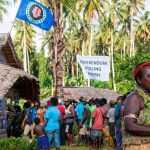
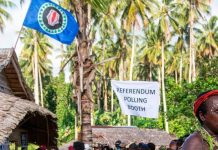
President Toroama announces final position on Bougainville independence

0

The Autonomous Bougainville Government (ABG) has formally outlined its final position on Bougainville’s political future, proposing a clear and peaceful pathway towards self-government and eventual independence.

President Ishmael Toroama presented the position Tuesday to the Independent Facilitator overseeing the Joint Technical consultations between ABG and the National Government, reaffirming that Bougainville’s aspirations are grounded in the Bougainville Peace Agreement, the Constitution of Papua New Guinea and the commitments that have guided the peace process over the past two decades.

“Today, I stand before you to present the final position of the Autonomous Bougainville Government regarding Self-government and Independence for Bougainville,” President Toroama said.

The final position proposes a three-stage pathway.

Under the proposal, Bougainville will continue preparations for self-government until 01 September 2027, focusing on strengthening institutions, governance systems, peace and security, and economic readiness.

From 01 September 2027, Bougainville would enter a period of self-government, exercising the fullest practical and constitutional authority available under the existing legal framework, including additional powers provided under Section 289 of the Constitution.

The proposal further envisages Bougainville attaining independence in 2030 as defined during the referendum process as an independent nation-state recognised under international law and separate from the State of Papua New Guinea.

President Toroama said the pathway provides certainty, preserves peace and honours the democratic choice expressed by the people of Bougainville.

He said Bougainville has consistently honoured both the letter and spirit of the Peace Agreement through dialogue, consultation and constitutional processes.

“This position is not founded on emotion or convenience. It is founded on the Bougainville Peace Agreement, on Part XIV of the Constitution of Papua New Guinea, and on the solemn commitments and agreements that have guided our journey and preserved peace to date,” Toroama said.

The President noted that the 2019 Referendum delivered a clear mandate from the people of Bougainville in favour of independence and that subsequent consultations between the ABG and the National Government had produced several important agreements, including the Joint Communique of 11 January 2021, the Kokopo Joint Statement, Wabag Joint Statement, APEC Joint Statement, Era Kone Covenant and the Melanesian Agreement.

The President emphasised that Bougainville remains committed to dialogue, consultation and constructive engagement with the Government of Papua New Guinea.

“Our objective has never been confrontation. Our objective has always been reconciliation, partnership and a peaceful transition founded on law and mutual respect.”

He reaffirmed the importance of maintaining a strong and cooperative relationship between Bougainville and Papua New Guinea regardless of future political arrangements.

President Toroama also called on the people of Bougainville to remain united, patient and committed to protecting the peace achieved through years of reconciliation and dialogue.

The ABG maintains that the proposed pathway represents a practical and peaceful framework for advancing Bougainville’s political future while safeguarding stability, democracy and the gains made through the peace process.

Following the presentation of the final position, President Toroama formally handed the Bougainville Final Position Paper to the Independent Facilitator and the Chief Secretary to the Government of Papua New Guinea, marking the formal submission of Bougainville’s final position.

Stay connected

529FansLike
172FollowersFollow
156SubscribersSubscribe
- Advertisement -